Tax Planning for UK Cleaning Businesses: A Simple Guide
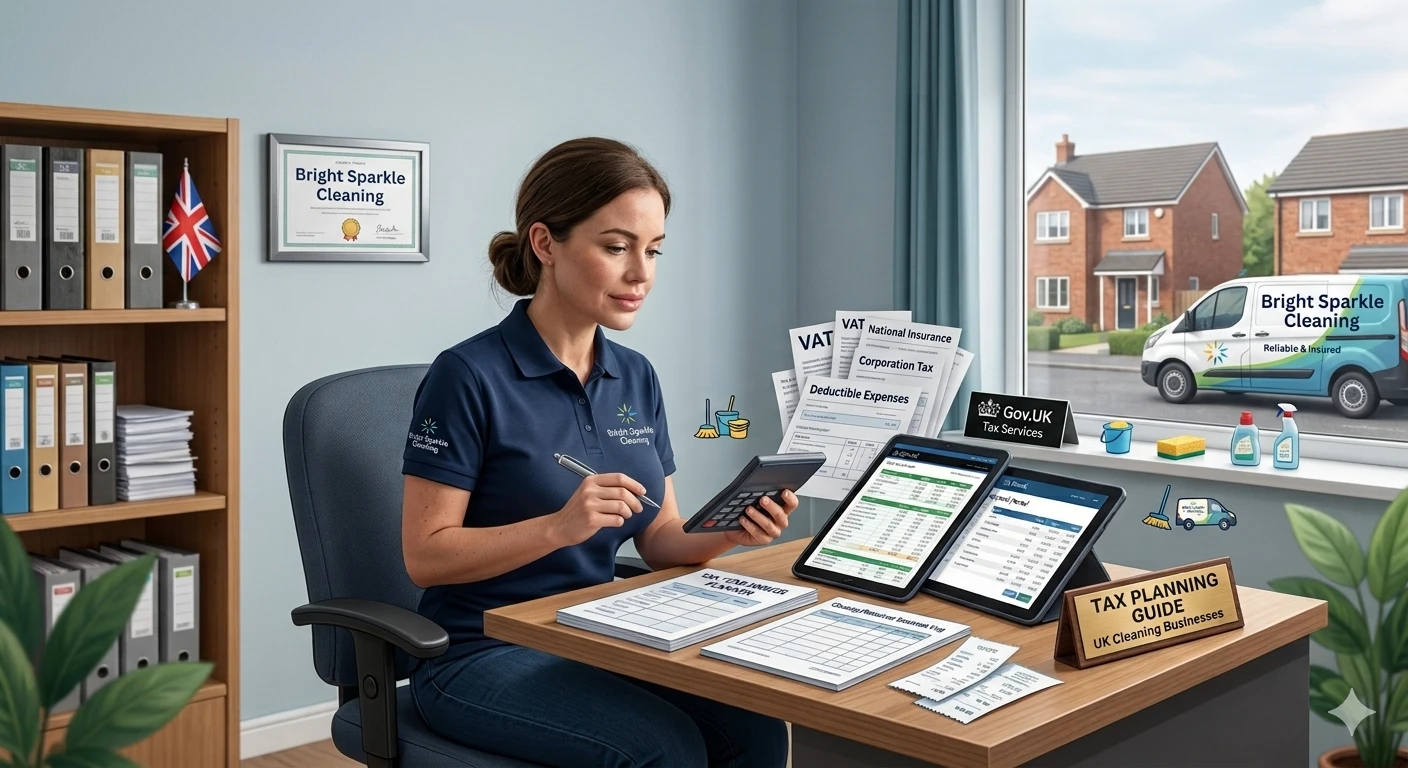
Running a cleaning firm keeps you busy from early morning until late evening. Paperwork often slides to the bottom of your pile, yet HMRC expects accurate figures on time. Some preparation today saves money, stress, and nasty surprises later.
Why Tax Planning Matters for Your Cleaning Business
Smart preparation means knowing what you owe before a bill lands on your doormat. Many owners spend their takings during quiet months, then panic when January arrives. Setting aside a fixed share of every payment avoids that trap.
Planning also helps you spot savings. Claiming allowed costs lowers profit on paper, which cuts what HMRC charges. Late filing brings fines plus interest, so organised habits protect your cash. Good records even impress banks if you ever want finance for a new van.
Here are the main benefits:
Fewer shocks as deadlines approach;
More money kept through legal claims;
Clear numbers for loans, quotes, growth decisions;
Lower risk of penalties.
What Counts as Taxable Income for a Cleaning Business
Money your firm earns from customers is the starting point. Every invoice, cash payment, and bank transfer counts, whether it comes from one home or fifty offices. Tips plus fees for extras such as carpet shampooing belong in your totals too.
Profit matters more than turnover, since it equals income minus allowed costs. Typical items you can deduct include:
Cleaning products plus machines;
Fuel, repairs, van insurance;
Uniforms with protective gloves;
Advertising, website fees, software;
Wages paid to staff.
Keep receipts for everything. Store them in folders, or snap photos with an app. Opening a separate bank account for work also keeps sums tidy. HMRC can request records going back several years, so tidy files make life easier.
Small earners get some relief. A trading allowance lets sole traders earn up to £1,000 without reporting it. Anything above that needs a Self Assessment return, where you pick between the allowance or real expenses. Choose whichever option gives the smaller profit figure.
Income Tax and National Insurance for Cleaning Business Owners
Sole traders settle their bill through Self Assessment. Everybody receives a tax-free personal allowance, currently £12,570. Beyond that, earnings face a 20% rate, rising to 40% on higher amounts, then 45% above £125,140.
Class 4 contributions apply once profits pass a set level. Rates sit lower than those of Income Tax, yet they still add up. Class 2 is now voluntary, though paying it can protect your state pension record.
Dates deserve space in diaries:
5 October after your first tax year: tell HMRC you started trading;
31 January: file online, then pay what is due;
31 July: make second payment on account.
A limited company works differently. That firm pays Corporation Tax on profit, while owners draw salary or dividends, each taxed separately. An accountant can show which route leaves more in your pocket.
Tax Basics for Commercial Cleaning Businesses in the UK
Offices, shops, schools, and warehouses all need regular care. Contracts here are often larger and steadier than household work, so income grows fast. Late payers appear often in this sector, so agree clear terms upfront. Growth brings extra rules, and commercial cleaning firms feel them sooner.
VAT is the big one. Once sales pass £90,000 within twelve months, registration becomes compulsory. Business customers can usually reclaim VAT, so being charged rarely bothers them. Voluntary registration may even help, since you recover VAT paid on supplies.
Staff add another layer. Hiring cleaners as employees means running PAYE, deducting amounts from wages, then paying employer contributions. Check worker status carefully before calling anyone self-employed, because HMRC examines this area closely.
Steady office cleaning contracts also need a solid paper trail. Invoice promptly, log each payment, and file everything neatly. Whether your cleaning service is solo or growing, good habits keep surprises away.
Tax planning is really about habits. Save a little from every job, record all costs, and learn which deadlines apply. Doing so keeps HMRC happy and your bank balance healthy. Small steps now build confidence for every year ahead, whatever size your company becomes. Professional advice remains worthwhile whenever rules feel unclear.
Feeling stuck with the cleaning side of things? Busy Bee Clean offers reliable professional teams, leaving you free to concentrate on numbers. Visithttps://busybeeclean.co.uk/ today and request a quote.

Ehatasamul Alom is a strategic financial thinker and the co-founder of TaxableIncomeCalculator. He specializes in developing precise digital tools that simplify the complex UK tax system. Ehatasamul is committed to helping freelancers and professionals navigate HMRC compliance with ease. By staying updated on the latest UK budget changes and legislative updates, he ensures every calculation is accurate and reliable. His goal is to empower UK taxpayers with the clarity they need to manage their personal and business finances effectively.